





A simple switch that can make your baby’s feeding setup a little less plastic-heavy.
There are approximately 47 things to think about when you’re choosing baby bottles.
Nipple shape.
Flow rate.
Anti-colic systems.
Bottle size.
How easy they are to clean.
And then there’s the question we keep coming back to:
Glass or plastic?
For us, glass wins.
Not because plastic baby bottles are automatically dangerous or because you need to throw every plastic bottle in your house into the recycling bin immediately.
We simply like glass as a simple, durable, lower-plastic alternative for something that holds your baby’s milk multiple times a day.
And once you look at the pros and cons, the choice starts to make a lot of sense.
Why We Prefer Glass Baby Bottles
1. Glass Doesn’t Require the Same Plastic Contact
This is the biggest reason we choose glass.
Baby bottles made from plastic can be manufactured from different types of plastic, and “BPA-free” doesn’t mean the bottle contains no chemicals or that it is somehow equivalent to glass.
Glass, on the other hand, is a relatively simple material.
For parents who are trying to reduce unnecessary plastic exposure — particularly around food and beverages — that’s appealing.
Our philosophy: when there’s an easy opportunity to choose glass instead of plastic, why not?
2. Glass Handles Heat Well
Baby bottles are frequently exposed to warm water, bottle warmers and hot liquids.
Glass has excellent heat resistance compared with many plastics and doesn’t have the same concern about plastic softening or degrading with repeated heating.
That doesn’t mean you should take a cold glass bottle and immediately pour boiling water into it.
Always follow the manufacturer’s instructions for temperature and use.
But for everyday bottle preparation and warming, glass is a very practical material.
3. Glass Doesn’t Hold Onto Smells or Stains
If you’ve ever washed a plastic food container and thought:
“Why does this still smell like tomato sauce?”
You already understand the problem.
Plastic can absorb odors and become stained over time.
Glass is much less prone to this.
That means your bottles are easier to keep looking and smelling clean — even after months of regular use.
And when you’re washing bottles approximately 400 times a day, we’ll take the easy win.
4. Glass Is Extremely Durable
Okay, hear us out.
Yes.
Glass can break.
Obviously.
But high-quality baby bottles are typically made with tempered glass specifically designed to be more durable than ordinary household glass.
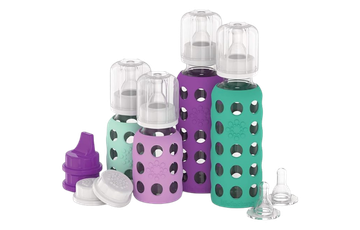
Many also come with silicone sleeves for additional protection.
So while we’re not suggesting you hand a glass bottle to a toddler and tell them to play catch, they’re perfectly practical for everyday baby feeding when used as directed.
5. Glass Can Last a Long Time
One of our favourite things about buying better products is not having to constantly replace them.
A good glass bottle can be used again and again.
The bottle itself can last while you simply replace the parts that wear out, such as nipples.
That makes glass a potentially more sustainable choice than continually replacing bottles.
And there’s another bonus:
Glass bottles can be passed along.
Provided they’re still in good condition and all manufacturer safety recommendations are followed.
6. Glass Is Recyclable
Glass is widely recyclable, although actual recycling systems vary by municipality.
Plastic recycling is considerably more complicated, and not every type of plastic is actually recycled in practice.
So while no product has zero environmental impact, glass can be an appealing option for parents trying to reduce their household’s reliance on single-use and disposable materials.
For us, that’s part of the bigger picture.
We’re not trying to create a zero-waste nursery.
We’re just trying to make better choices where they’re easy to make.
But Are Plastic Baby Bottles Bad?
No.
And we’re not going to tell you they are.
Plastic baby bottles can be perfectly functional, safe when manufactured and used according to applicable standards, lightweight and convenient.
They’re especially handy when you’re travelling or when you’re worried about dropping a bottle.
The bigger point is simply this:
If you’re choosing a new bottle system and want to reduce plastic where practical, glass is worth considering.
You don’t need to panic about the plastic bottle your baby used yesterday.
You can simply make a different choice next time.
That’s a much more realistic approach.
What About BPA-Free Plastic?
This is where things get confusing.
You’ve probably seen BPA-free on baby bottles, food containers and pretty much everything else.
BPA-free is a good thing.
But it doesn’t mean the product is completely free from all chemicals that could potentially migrate from plastic.
BPA is just one specific chemical.
That’s one reason we like the simplicity of glass.
Instead of trying to decode a long list of plastic types and chemical substitutions, we can choose a material that’s relatively straightforward.
What Should You Look For in a Glass Baby Bottle?
Not all bottles are created equal.
When you’re shopping, look for:
Tempered glass
This is designed to be more durable than ordinary glass.
Silicone sleeves
These provide additional grip and protection against bumps and drops.
Silicone nipples
Look for clearly identified materials and age-appropriate flow rates.
Easy-to-clean designs
Because complicated bottle systems sound much more fun before you actually have to wash them.
Replacement parts
Make sure you can easily purchase replacement nipples, rings and other components.
A reputable manufacturer
Especially with baby feeding products, we like brands that clearly identify their materials and provide detailed care and safety instructions.
Glass vs. Plastic Baby Bottles: At a Glance
| Comparable | Glass | Plastic |
|---|---|---|
| Plastic contact | Lower | Higher |
| Odor absorption | Very low | Can occur |
| Staining | Minimal | More likely |
| Heat resistance | Excellent | Depends on plastic |
| Weight | Heavier | Lightweight |
| Breakage risk | Higher | Lower |
| Recyclability | Generally recyclable | Depends on plastic/type |
| Longevity | Very durable | Can wear/scratch |
| Our preference | Yes | Fine when needed |
When Plastic Might Actually Make More Sense
We’re big fans of glass.
We’re also fans of being realistic.
If you’re travelling, sending bottles to daycare, or simply find glass too heavy for your particular routine, a high-quality plastic bottle may be the better choice for you.
The goal isn’t to make parenting harder in the name of being “non-toxic.”
It’s to make better choices where they actually work for your family.
If glass works for you?
Great.
If it doesn’t?
Also great.
Your baby isn’t keeping score.
A Few More Ways to Reduce Plastic Around Feeding
If you’re already thinking about your baby’s bottles, there are a few other easy swaps you can make over time.
Choose glass food storage
Especially for foods that will be heated.
Choose silicone feeding products
When your baby starts solids, food-grade silicone can be a useful alternative to some plastic feeding products.
Skip disposable whenever practical
Reusable products generally create less waste than constantly replacing disposable alternatives.
Don’t microwave plastic
If you’re heating food or milk, follow the manufacturer’s instructions and consider transferring food to a glass container when appropriate.
Don’t replace everything at once
This is important.
You don’t need to empty your kitchen and start again.
Use what you already have.
Replace things gradually as they wear out.
Our Take
At Best for Baby Collective, we’re not interested in convincing parents that every plastic product is dangerous.
We’re interested in helping you spot the easy swaps.
Glass baby bottles are one of them.
They’re durable.
They’re easy to clean.
They don’t absorb smells.
They’re reusable.
And they reduce the amount of plastic involved in one of the most frequently used baby products in your home.
That’s a pretty good trade-off.
And if your baby throws it across the kitchen?
Well…
That’s why they invented silicone sleeves.
Shop Our Glass Baby Bottle Pick
Shop the bottle on Amazon Canada →
- All components are made in the U.S. Or Europe. Product assembled in the U.S
- Dishwasher safe (place cap parts and nipple on top rack/no need to remove silicone sleeve unless desired)
- Compatible with most major breast pumps

This post contains affiliate links. If you purchase through one of our links, we may earn a small commission at no additional cost to you. We only recommend products we believe are worth considering.
Best for Baby Collective
Thoughtful choices for little ones, without the overwhelm.