





Baby skin is soft, delicate and, somehow, capable of going from perfectly smooth to dry and irritated overnight.
The good news? Baby skincare doesn’t need to be complicated.
In fact, we’re big believers in keeping it simple. A few thoughtfully chosen products are usually all you need — and there’s no reason your bathroom counter needs to look like a miniature skincare aisle.
Here’s what we look for when choosing lotions, oils and body washes for babies.
First: Less Is Usually More
Babies don’t need a 10-step skincare routine.
Their skin is still developing, so we’re not looking to overwhelm it with layers of different products, fragrances and unnecessary ingredients.
For everyday care, we’d rather have:
- A gentle body wash
- A simple moisturizer
- A nourishing oil, if needed
- A good diaper cream
That’s pretty much the starting lineup.
And if your baby’s skin is happy with fewer products? Even better.
What to Look for in Baby Body Wash
When choosing a baby wash, start with the ingredient list rather than the front of the bottle.
We look for formulas that are:
Fragrance-free or lightly scented:
Fragrance can be irritating for some babies, especially those with sensitive skin. If you’re trying to keep things simple, fragrance-free is a great place to start.
Gentle cleansers:
You don’t need a product that leaves baby’s skin feeling squeaky clean. That squeaky feeling can actually mean the skin’s natural oils have been stripped away.
Moisturizing ingredients:
Ingredients like glycerin can help attract and retain moisture, making them a useful addition to a gentle baby wash.
No unnecessary extras:
We’re always happier with a short, purposeful ingredient list than a bottle full of things that don’t really need to be there.
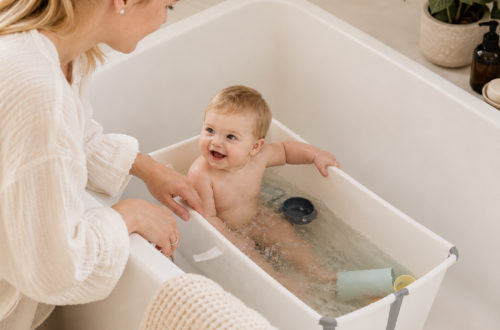
And remember: baby doesn’t necessarily need a full-body scrub-down every day. For many babies, frequent bathing can contribute to dryness.
What About Baby Lotion?
A good baby lotion should do one main thing:
Help keep skin comfortable and moisturized.
Look for straightforward moisturizing ingredients such as glycerin, shea butter, plant oils or other emollients that help soften and protect the skin.
We also like products that don’t rely heavily on fragrance to make them feel luxurious.
Because your baby doesn’t need to smell like a tropical vacation.
They already smell pretty good.
When should you use lotion?
You can apply moisturizer after bathing while the skin is still slightly damp. This can help lock in some of that moisture.
But you don’t necessarily need to moisturize your baby from head to toe every single day if their skin is already soft and comfortable.
Follow baby’s skin rather than a skincare schedule.
Baby Oil: Is It Actually Necessary?
Baby oil can be useful, but it’s definitely not an essential.
A simple plant-based oil can help moisturize dry areas or be used for gentle massage.
When choosing one, look for a simple ingredient list and avoid heavily fragranced formulas if your baby has sensitive skin.
Some parents like oils such as jojoba, sunflower or coconut oil, while others prefer a formulated baby moisturizer.
There’s no prize for having both.
If a good lotion is doing the job, you can happily skip the oil.
Ingredients We Like to See
When we’re shopping for baby skincare, we’re not looking for a magic ingredient list.
We’re looking for simple, purposeful formulas.
Some ingredients we like seeing include:
Glycerin — helps attract moisture to the skin.
Shea butter — a rich emollient that can help soften dry skin.
Sunflower oil — a lightweight plant oil commonly used to moisturize and support the skin barrier.
Jojoba oil — a gentle-feeling emollient used in many skincare products.
Colloidal oatmeal — commonly used in products designed for dry or sensitive skin.
Ceramides — naturally occurring lipids that help support the skin barrier.
The important thing is the whole formula, not one trendy ingredient.
A product containing shea butter isn’t automatically better than one without it.
Ingredients We’d Be More Cautious About
This is where our ingredient-conscious approach comes in.
We’re not interested in fear-mongering or declaring every conventional ingredient “toxic.”
Instead, we prefer to minimize things that aren’t really necessary for baby’s skin.
Added fragrance
This is one of the easiest things to skip.
A fragrance-free product can be a particularly good choice for newborns and babies with sensitive skin.
Essential oils
Natural doesn’t automatically mean gentle.
Essential oils can be irritating for some babies, so we don’t consider them a requirement for a good baby skincare product.
Strong exfoliating ingredients
Baby skin generally doesn’t need exfoliation.
Save the acids and aggressive scrubs for your own bathroom shelf.
Long lists of unnecessary extras
The longer the ingredient list, the better?
Not necessarily.
We’re much more interested in why an ingredient is there than how many ingredients are on the label.
What About “Natural” and “Non-Toxic”?
This is one of our biggest rules at Best for Baby:
Don’t shop by the marketing on the front of the bottle.
Words like natural, clean, pure and non-toxic can sound reassuring, but they don’t tell you everything about a product.
Instead, turn the bottle around.
Look at the ingredients.
Look for certifications when they’re available.
Consider whether the product is fragrance-free.
And ask yourself whether your baby actually needs it.
That’s a much better way to shop.
Our Baby Skincare Rule: Start Simple
If you’re building a baby skincare collection from scratch, we’d start with just a few things:
1. A gentle body wash
For bath time and those inevitable messy moments.
2. A simple moisturizer
For dry skin or whenever baby’s skin needs a little extra hydration.
3. A diaper cream
Because diaper changes have a way of becoming a full-contact sport.
4. A simple oil — optional
Lovely for massage or particularly dry areas, but definitely not mandatory.
That’s it.
You don’t need a separate lotion for baby’s arms, another for their legs and something entirely different for their cheeks.
Baby skincare should be simple, gentle and intentional.
And One More Thing…
If your baby’s skin is persistently dry, cracked, inflamed, itchy or developing a rash that isn’t improving, don’t keep adding products and hoping for the best.
Sometimes the best skincare decision is knowing when to stop experimenting and ask your healthcare provider about what’s going on.
Because “natural” doesn’t always mean appropriate for every skin concern.
Our Best for Baby Approach
We’re not looking for the most expensive bottle on the shelf.
We’re looking for products with thoughtful ingredients, minimal unnecessary extras and a purpose behind every product.
Baby skin doesn’t need more.
It needs the right things, used simply.
And honestly, that’s a skincare philosophy we can get behind for ourselves, too.