
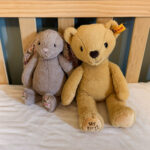


There are a lot of adorable stuffed animals out there.
Jellycat has made an entire career out of making things ridiculously cute — bunnies, bears, vegetables, fruit, pastries… honestly, we’re surprised there isn’t a tiny sourdough starter yet.
We get the appeal.
But when we’re choosing a teddy bear for a baby or child, we’re looking for something a little different.
Quality. Materials. Longevity. And something that doesn’t feel like it was designed to be replaced next season.
That’s where Steiff wins for us.


Why Steiff?
Steiff has been making soft toys since 1880, long before teddy bears became a nursery staple.
The brand is famous for its iconic Button in Ear, meticulous construction and classic teddy-bear designs.
But what really caught our attention as a brand focused on more thoughtful baby products is the variety of materials Steiff uses.
Steiff’s manufacturing materials include organic cotton, mohair, wood wool, bamboo, hemp, linen and recycled PET, alongside synthetic fibres. The company also has a GOTS-certified organic cotton baby collection. (Margarete Steiff GmbH)
That’s the kind of material transparency we like to see.
Is Steiff Non-Toxic?
Here’s where we’re going to be a little careful with our wording.
We wouldn’t call every Steiff bear “non-toxic.”
Why?
Because not every Steiff bear is made from natural materials.
For example, the current My First Steiff Teddy Bear is made with 100% polyester plush and synthetic filling. Steiff says the bear is made without harmful dyes and pollutants and complies with hygiene and purity requirements. (Steiff North America)
And that’s an important distinction.
At Best for Baby, we’re not interested in slapping a “non-toxic” label on something just because it sounds good.
We’re interested in what it’s actually made from.
And Steiff gives shoppers some really interesting options.
What About Jellycat?
Here’s another little reality check:
Jellycat is primarily polyester, too.
Jellycat states that the majority of its products are manufactured using polyester, and its stuffing is generally polyester fibre. Some products also contain PE beans. (Jellycat)
That doesn’t mean Jellycat is unsafe.
In fact, Jellycat says it regularly tests fabrics for restricted chemicals under regulations including REACH, the Toy Safety Directive, California Prop 65 and CPSIA. (Jellycat)
So we’re not going to say Jellycat is “toxic.”
That’s simply not supported by the information available.
The difference we’re interested in is materials and product philosophy.
And that’s where Steiff gives us more options.
Our Favourite Steiff Bears
🧸 My First Steiff Teddy Bear
Best for baby’s first teddy


If you’re buying a first teddy for a baby, this is the Steiff we’d start with.
It’s soft, simple and designed specifically for little ones.
The bear has embroidered eyes rather than traditional hard eyes, and Steiff states that the product is made without harmful dyes and pollutants. (Steiff North America)
One note: despite the “natural materials” conversation, this particular bear is polyester, so we wouldn’t market it as an organic or natural-fibre teddy.
It’s still a beautifully made, thoughtfully designed option.
Shop My First Steiff →
Amazon Canada
🧸 Steiff Nele Teddy Bear
A more natural-material option


Now this is where things get more interesting for us.
Steiff’s Nele Teddy Bear uses fluffy cotton described by Steiff as organically grown, while the filling combines organic cotton with recycled PET bottles. (Steiff North America)
That’s much more in line with what we’re looking for when we talk about better material choices.
It’s soft, classic and doesn’t scream “plastic toy.”
Shop Steiff Nele →
Amazon Canada
🧸 Steiff “Teddies for Tomorrow”
Our pick for a more eco-conscious teddy


This collection is particularly interesting.
Steiff’s Teddies for Tomorrow collection uses alternative materials including recycled PET, organic cotton and bamboo viscose, depending on the individual bear.
For example, the Petsy Teddy Bear has a coat made from bamboo viscose, organic cotton paw pads and muzzle, and filling made from recycled PET bottles. (Steiff North America)
The Molly Teddy Bear similarly uses recycled plastic bottles for both its plush and stuffing, with organic cotton used for the paw pads and muzzle. (Steiff North America)
It’s not plastic-free — recycled polyester is still polyester.
But using recycled material is a meaningful step toward a more considered product.
Shop Steiff Teddies for Tomorrow →
Amazon Canada
Why We Prefer Steiff
For us, it comes down to three things:
1. Material transparency
We can actually see what individual Steiff products are made from.
And there are options ranging from traditional plush to organic cotton, bamboo viscose and recycled materials. (Margarete Steiff GmbH)
2. Craftsmanship
Steiff has been making teddy bears for more than a century.
The goal isn’t simply to create something cute enough to go viral.
It’s to create something that can become a child’s teddy.
3. Longevity
We love products that don’t feel disposable.
A teddy bear should ideally become more special the longer your child has it.
A little worn?
Perfect.
Missing a little fluff?
Character.
Covered in mystery stains?
Congratulations. It’s officially theirs.
So, Steiff or Jellycat?
If you’re looking for the cutest novelty plush, we’re not going to argue with Jellycat.
They’re adorable.
But if you’re looking for a classic teddy bear with a long history, strong craftsmanship and more thoughtful material options, we’d choose Steiff.
Especially if you’re willing to look beyond the standard polyester plush and choose one of Steiff’s organic cotton or “Teddies for Tomorrow” designs.
That’s much more aligned with how we shop at Best for Baby Collective:
Less stuff. Better stuff. More thoughtful choices.
Our Steiff Picks
Best first teddy:
🧸 My First Steiff Teddy Bear
Best organic-material option:
🧸 Steiff Nele Teddy Bear
Best eco-conscious collection:
🧸 Steiff Teddies for Tomorrow
Best heirloom:
🧸 Classic Steiff Teddy Bears
Our Verdict
Jellycat is cute. Steiff is timeless.
And while we wouldn’t claim that every Steiff bear is “non-toxic” or plastic-free, we do love that Steiff offers more natural and recycled material options and is transparent about what individual products are made from.
For a brand built around making more thoughtful choices for babies and kids, that’s exactly the kind of distinction worth paying attention to.
And if we’re buying one teddy to become the teddy?
We’re picking Steiff.
This post may contain affiliate links. If you purchase through one of our links, Best for Baby Collective may earn a small commission at no additional cost to you. We only recommend products we believe are worth considering. Product materials and formulations can change, so always check the manufacturer’s current product information before purchasing.